My 6-Month Strategy to Pass the PMP Exam While Working Full-Time
Explore a six-month PMP study strategy for working professionals, with practical lessons on study planning, consistency and exam preparation.
When I set out to earn my [Project Management Professional (PMP)® certification](https://www.pmi.org/certifications/project-management-pmp), I knew it would test more than my knowledge — it would test my discipline. Managing a demanding full-time corporate job while preparing for one of the **world’s toughest project professional exams** was no easy feat.
The PMP is held by over **1.4 million professionals worldwide** and is recognized as the **gold standard** in project leadership. According to PMI’s 2024 Salary Survey, **PMP-certified professionals earn 32% more on average** than their peers. Unlike many academic or theoretical degrees, the PMP is built on **practical leadership, real-world decision-making, and value delivery**, skills that separate managers from true project leaders.
After **six focused and structured months**, I passed on my first attempt. Here’s the exact strategy I used — and how you can replicate it.
The Decision Why I Took the PMP
As a professional in corporate job, **managing complex projects and strategic initiatives**, I wanted a **globally recognized certification** to formalize my skills and open doors to more strategic roles. The PMP represents not just project management knowledge, but the ability to **lead teams**, **drive results**, and **deliver value** (**Benefits realization**).
But with a full-time day job, I knew I had to manage this like a project itself, structured, goal-driven, and realistic.
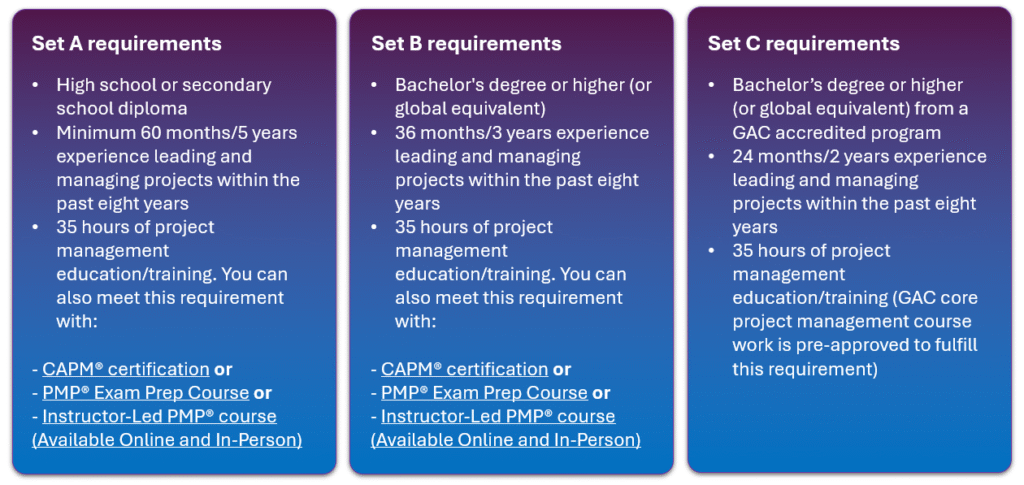
PMP Examination Requirements ( Eligibility)
To qualify for the **Project Management Professional (PMP)®** **certification**, PMI requires candidates to demonstrate both **education**and **practical project leadership experience**. There are three eligibility pathways based on academic background and project management exposure:
The Plan: Treating the PMP Like a Project
One of the first things I realized when preparing for the PMP is that **there is no single, structured study approach** **defined by PMI itself**. Both the PMBOK® Guide (7th Edition) and the Process Groups: A Practice Guide provide valuable frameworks, **but neither serves as a step-by-step manual**for passing the exam.
That’s why the real foundation of the exam, and your preparation, must be the **PMP Examination Content Outline (ECO)**. The ECO defines exactly **what PMI will test you on**, across three domains:
Below was my six-month roadmap, practical, structured, and tailored to balance my professional and personal schedule.
Every week, I scheduled 1–2 hours daily sometimes during lunch hours on weekdays and 4–5 hours on weekends. Evenings became study time, and I treated it as a non-negotiable appointment with my goals.
Study Resources I Used
Preparing for the PMP requires selecting high-quality, PMI-aligned materials that reflect both the PMBOK® 7th Edition principles and the Examination Content Outline (ECO).
Below are the resources I used throughout my six-month study journey:
[**PMBOK® Guide Seventh Edition**](https://www.pmi.org/standards/pmbok)
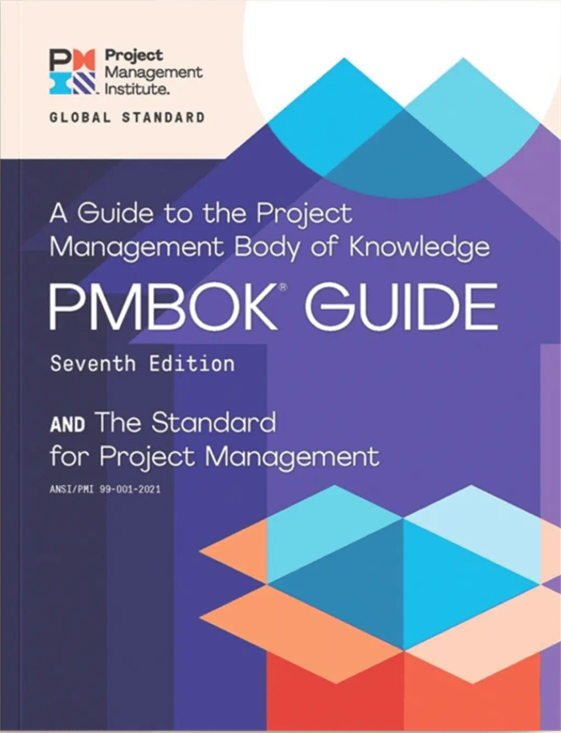
**Purpose**: The foundation of modern project management principles. It focuses on performance domains, tailoring, value delivery, and systems thinking, rather than prescriptive processes.
**[Process Groups: A Practice Guide](https://www.pmi.org/standards/process-groups)**
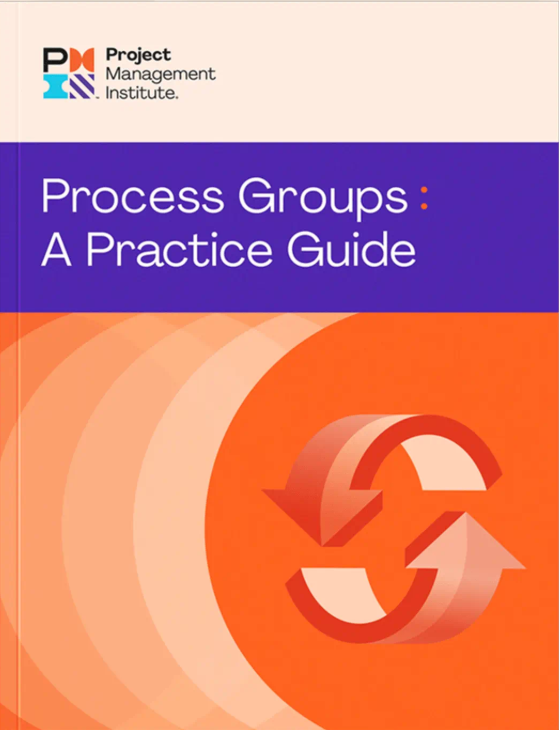
**Purpose**: Complements PMBOK 7 by bridging the shift from process-based to principle-based management. It details the five process groups (Initiating, Planning, Executing, Monitoring & Controlling, Closing) and aligns them to the 10 knowledge areas, a vital link for exam situational questions.
**[Agile Practice Guide (by PMI and Agile Alliance](https://www.pmi.org/standards/agile)**)
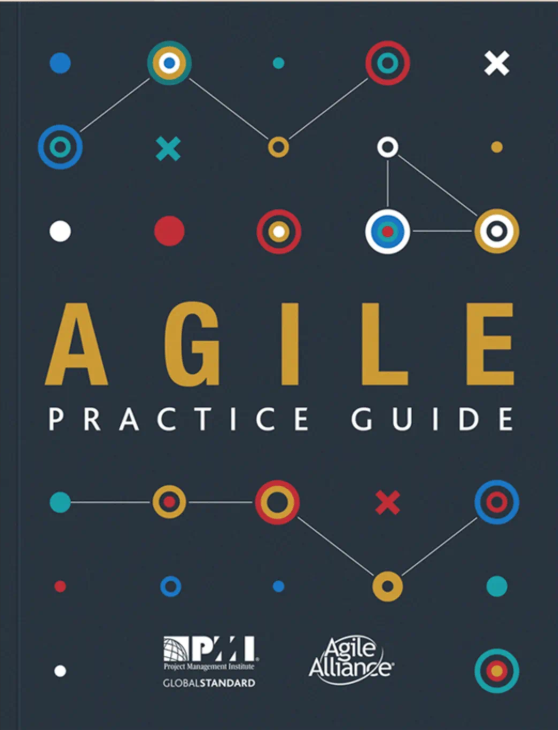
**Purpose**: Essential for understanding Agile, Scrum, Kanban, and hybrid approaches tested heavily in the current PMP exam. It provides guidance on servant leadership, iteration planning, and adaptive life cycles.
[PMP Examination Content Outline (ECO)](https://www.pmi.org/certifications/project-management-pmp)
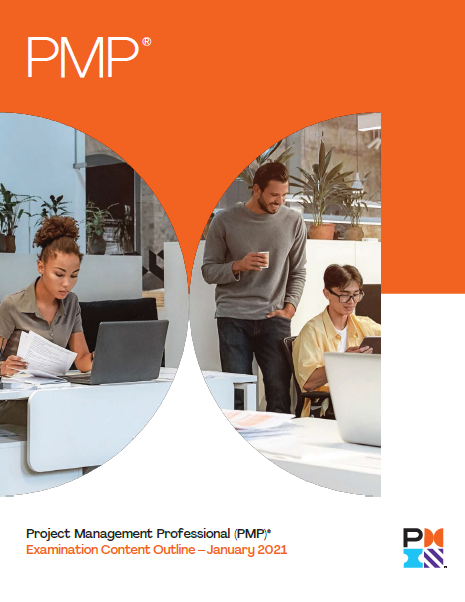
**Purpose:** The **official blueprint for the PMP exam.** It defines the three domains (*People, Process, Business Environment*), their **tasks and enablers**, and how each contributes to PMI’s Value Delivery System.
**[Microsoft Project Management: Build Job-Ready Skills Professional Certificate (Coursera)](https://www.coursera.org/professional-certificates/microsoft-project-management)** **Purpose:** A practical online specialization that reinforces **planning, scheduling, risk, and stakeholder management** using Microsoft Project tools. It bridges **academic theory with applied execution**, mirroring real project environments.
[Instructor-Led PMP Exam Prep (PMI Authorized Training Partner options) + On-Demand Video Course](https://www.pmi.org/learning/authorized-training-partners) **Purpose**: Live instruction via PMI ATPs (choose virtual or in-person) and/or structured on-demand video. Check out the PMI – Authorized PMP® Exam Prep Course (catalog of PMI-developed options).
[PMI Study Hall® Essentials (Subscription)](https://www.pmi.org/shop/tc/p-/digital-product/project-management-professional-%28pmp%29-pmi-study-hall-essentials-%28subscription%29-/dp013) **Purpose***:* PMI’s official practice environment with questions, full exams, progress tracking, and gamified activities; creates a plan based on your exam date. Pricing varies by region; Essentials and Plus tiers are available.
Additional Free Learning Resources
**[Ricardo Vargas (YouTube)](https://www.youtube.com/@rvvargas)** – Renowned PMI author who explains project models and visual frameworks.
**[David McLachlan (YouTube)](https://www.youtube.com/@davidmclachlanproject)** – Detailed PMP exam strategy, mindset, and simulation guidance.
**[Andrew Ramdayal (YouTube & Udemy)](https://www.youtube.com/@AndrewRamdayal)** – Known for high-yield question analysis and simplified agile explanations.
These resources collectively ensured balanced coverage of **PMI’s mindset, principles, and practice domains**. While the PMBOK® 7th Edition and ECO guided *what to learn*, simulators, courses, and interactive tools guided *how to think and apply*, a critical distinction for passing the PMP on the first attempt.
Final Thought: Discipline Over Motivation
Looking back, passing the PMP on my first attempt was not about studying harder — it was about studying smarter, with structure, intent, and the right mindset. The PMP isn’t a test of memory; it’s an assessment of how you think, lead, and deliver value.