How Organizational Behaviour Affects Performance
See how organisational culture influences coordination, accountability and execution, and how leaders can improve business performance.
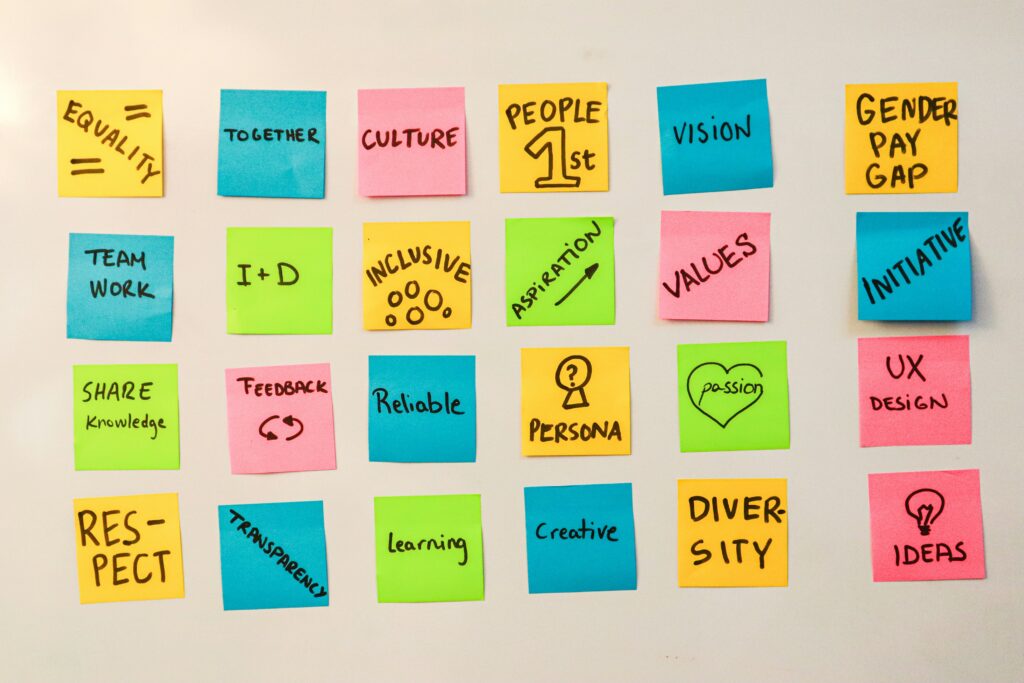
Culture is often treated as a soft issue. In reality, it is an economic one.
Every organization pays for its culture either through performance or through friction. That friction is the hidden operating cost created by behaviour;
- Slow decisions
- Duplicated effort
- Siloed execution
- Weak ownership
- Late escalation
- and risks that stay invisible until they become expensive
A healthy culture reduces that friction. A weak culture compounds it.
That is why organizational behaviour is not separate from performance. It is the mechanism through which performance is produced.
Think of strategy, budgets, KPIs, structures, and policies as the hardware of an organization. Culture is the operating system. You can have strong strategy and beautiful dashboards, but if the operating system is slow, fragmented, fearful, or overly hierarchical, the whole institution underperforms.
PMI’s latest work on enterprise agility reinforces this point. It defines enterprise agility as the capacity to adapt at scale without losing coherence, and argues that high-performing organizations create clarity of purpose, align on enterprise outcomes, govern with guardrails instead of gatekeepers, move authority to where value is created, make work visible, and design for adaptability rather than efficiency alone.
In many of our institutions, performance does not break down first because strategy is poor. It breaks down because behaviour creates drag inside the system.
A bank may have a strong business plan, but still lose momentum if frontline teams, credit, risk, legal, operations, and IT work in silos. A public institution may have an approved strategy, but still fail to execute if people are afraid to escalate problems early. A business may set growth targets, but still miss them if every decision must move up and down long approval chains before action can happen.
That is friction. And friction is costly.
- The first mechanism is authority flow. When authority is trapped at the top, every operational issue becomes a leadership bottleneck. [PMI](https://www.pmi.org/learning/agile/manifesto-for-enterprise-agility) is explicit that decision speed improves when authority sits closest to customers, data, and real work, rather than remaining stuck in rigid hierarchies. Clear guardrails enable faster and more effective decision making than permission based control.
- The second mechanism is collaboration quality. Weak cultures force information to move vertically and cautiously. Strong cultures allow information to move horizontally and honestly. PMBOK links accountable leadership to trust, responsibility, psychological safety, better team dynamics, stronger morale, improved decision making, and greater resilience. In other words, culture directly affects how well people solve problems together.
- The third mechanism is learning velocity. Organizations improve when work, dependencies, and risk are visible. PMI’s enterprise agility guidance argues that frequent value delivery and visible work create feedback loops, replace control with transparency, and unlock collaboration. That matters because institutions that learn faster respond faster.
A mature culture is not just strong. It is adaptive.
It keeps strategic coherence around the “why,” while allowing teams enough autonomy to adjust the “how.”
That lesson matters in Malawi and indeed in developing countries, where many organizations operate in volatile conditions: foreign exchange pressure, rising input costs, regulatory complexity, infrastructure constraints, shifting customer expectations, and tight margins. In such an environment, culture cannot be an HR side topic. It is a strategic capability.
- For financial institutions, culture affects turnaround times, cross-functional execution, client responsiveness, risk escalation, and accountability for value delivery.
- For agribusinesses and manufacturers, it affects coordination across procurement, production, logistics, sales, and finance.
- For public institutions and NGOs, it affects whether plans remain paper commitments or become measurable outcomes.
For leaders, the implication is direct.
Do not assess performance only through financials, plans, and KPIs.
Assess the behaviours underneath them.
Where are decisions really made? What behaviour gets rewarded? What gets escalated early, and what gets hidden? Are teams working for enterprise outcomes, or only protecting departmental territory?
In the end, culture determines how quickly an organization learns, how clearly it allocates authority, how honestly it confronts problems, and how effectively it turns strategy into results.
That is why culture is not a side issue.
It is the operating system of performance.